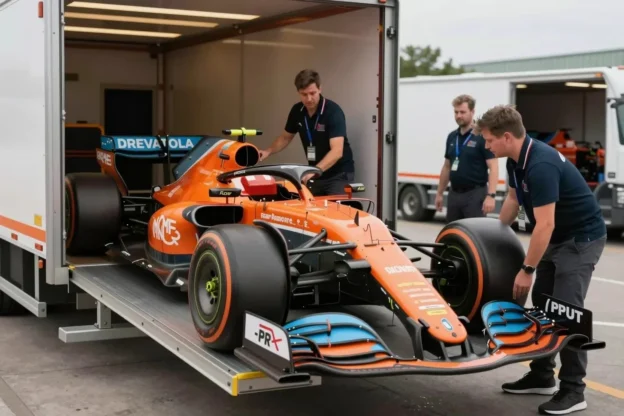
Transporting Formula 1 cars from one location to another is a complex and meticulously planned logistical operation. Given the global nature of the sport, teams must ensure that their racecars and equipment arrive at each venue on time and in perfect condition. This article delves into the logistics involved in transporting Formula 1 cars, covering aspects such as freight, air transport, shipping containers, and more.
The Importance of Logistics in Formula 1
Logistics is the backbone of Formula 1, ensuring that all aspects of the race team are where they need to be, when they need to be there. With races occurring across different continents, the efficient movement of cars, equipment, and personnel is critical. The logistics team must coordinate everything, from the disassembly and reassembly of racecars, to the transportation of spare parts and tools.
Air Transport: The Fastest Mode
For time-sensitive transportation, air transport is the preferred method. Cargo planes are used to move Formula 1 cars and equipment quickly between international destinations. Air transport is crucial for races that are scheduled close together, as it allows teams to minimize downtime and maximize preparation time for the next event.
Using Cargo Planes
Formula 1 teams often charter dedicated cargo planes for transportation. These planes are specially equipped to handle the unique requirements of transporting racecars and associated gear. The planes are designed to accommodate the size and weight of shipping containers that house the disassembled cars and equipment. This method ensures a high level of safety and efficiency.
Disassembly and Reassembly
Before loading onto cargo planes, racecars are carefully disassembled. This process involves removing components such as wings, wheels, and the engine to fit into standardized shipping containers. Once the cars and equipment arrive at their destination, the pit crew is responsible for reassembling the cars, ensuring they meet the precise specifications required for racing.
Sea Freight: Cost-Effective Shipping
While air transport is fast, it’s also expensive. For less time-sensitive items, or when races are scheduled further apart, sea freight offers a more cost-effective solution. Large containers are loaded onto ships, which then traverse the oceans to reach their destination. This method requires careful planning to ensure that all items arrive well in advance of the race weekend.
Shipping Containers
Formula 1 teams use specialized shipping containers to transport their cars and equipment. These containers are designed to withstand the rigors of international travel, protecting the contents from damage. The use of standardized containers also facilitates customs clearance, as they can be easily inspected and processed by customs officials.
Customs Clearance
Customs clearance is a critical aspect of international logistics. Each country has its own regulations regarding the import and export of goods, and Formula 1 teams must navigate these to ensure their equipment passes through customs smoothly. This process involves meticulous documentation and often requires coordination with local customs agents to expedite the process.
Safety and Efficiency
Safety is paramount in the transportation of Formula 1 cars and equipment. Every item must be securely packaged and handled with care to prevent damage. Teams employ specialized packaging materials and techniques to protect their valuable assets during transit. Efficiency is also key, as any delays can impact a team’s preparation and performance at the race.
Pit Crew and Transportation
The pit crew plays a vital role in the logistics of Formula 1. They are responsible for the quick and accurate assembly of cars once they arrive at the track. Their expertise ensures that the cars are ready to compete at the highest level, often under tight deadlines.
Time-Sensitive Deliveries
In the world of Formula 1, time is of the essence. Races are scheduled tightly, and any delay in transportation can have significant consequences. Teams must plan their logistics down to the minute, ensuring that all elements of the race operation are in place and ready to go when needed.
The transportation of Formula 1 cars is a sophisticated operation that combines elements of logistics, freight, air transport, and sea freight. By utilizing advanced techniques and technologies, teams can efficiently and safely move their cars and equipment around the world, ensuring they are always ready for the next motorsport event. The success of these operations is a testament to the skill and dedication of the logistics teams and pit crews who work tirelessly behind the scenes to keep the show on the road.