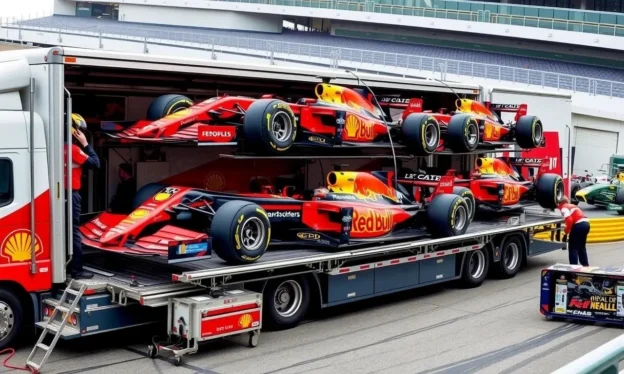
Transporting Formula 1 cars around the globe is a complex operation that involves meticulous planning and coordination. Given the international nature of motorsport events, the logistics behind moving cars and equipment form an integral component of a team’s race strategy. From air freight to ground transportation, every aspect is carefully orchestrated to ensure seamless travel between racing circuits.
Key Components of F1 Logistics
- Shipping Containers
- Freight Forwarding
- Customs Clearance
- Specialized Crates
- Ground Transportation
Air Freight and Shipping Containers
Formula 1 teams rely heavily on air freight for the rapid transit of their cars and equipment. Cars are dismantled and packed into shipping containers, specially designed to fit into cargo planes. These containers are equipped with all necessary packaging materials to ensure the cars are protected during transit.
Freight Forwarding and Customs Clearance
Professional freight forwarding companies are engaged to handle the logistics of air freight and ensure efficient customs clearance. The complexities of international travel demand precise documentation and adherence to various countries’ regulations. Teams rely on these experts to manage the intricate paperwork and avoid delays in the supply chain.
Transport Schedules and Race Calendar
The race calendar dictates the transport schedules. Teams usually have a detailed plan that outlines the movement of their equipment to align with the sequence of races. This plan involves coordinated efforts to ensure that the cars and team equipment arrive on time, ready for the next event.
Ground Transportation
Upon arrival at the destination, ground transportation takes over. Trucks and trailers are used to move the containers from airports to the racing circuits. The logistical operation extends to setting up at the circuit, where pit stop equipment and other technical gear are coordinated.
Storage Facilities and Event Coordination
At each venue, teams utilize storage facilities to hold their equipment until the cars are reassembled. The technical staff plays a crucial role in ensuring that everything is set up efficiently and ready for the race weekend. Event coordination ensures all elements are in place, from spare parts to hospitality suites.
Specialized Crates and Packaging Materials
To protect sensitive equipment, teams use specialized crates and packaging materials. These crates are custom-built to accommodate delicate components, such as engines and aerodynamics parts, ensuring that they remain in perfect condition throughout transit.
The Role of Cargo Planes
Cargo planes play a pivotal role in the logistics chain. They are chartered to transport not only the cars but also the extensive array of equipment needed to support the operation of a Formula 1 team. The ability to load and unload efficiently is crucial to maintaining tight schedules and supporting the team’s operational needs.
The logistics of transporting F1 cars is a marvel of modern engineering and planning. It requires the collaboration of logistics professionals, technical staff, and event coordinators to ensure that everything runs smoothly. This intricate process underscores the sophistication and global reach of the Formula 1 racing world, highlighting how the sport transcends mere competition on the track.