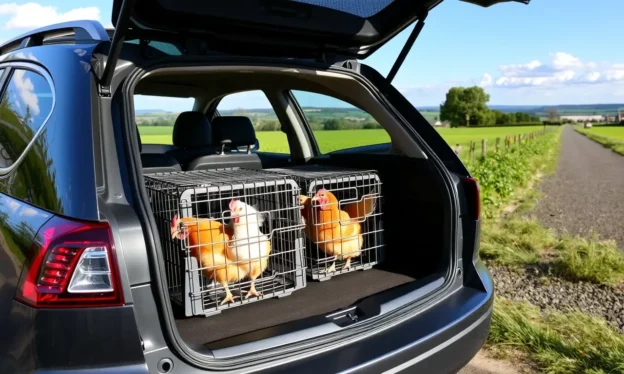
Transporting chickens in a car requires careful planning and preparation to ensure the safety, comfort, and well-being of the poultry during the journey. Whether you’re moving chickens to a new coop, taking them to a veterinary clinic, or transporting them for a show, adhering to best practices is crucial. This article provides a comprehensive guide on how to transport chickens safely and effectively in a vehicle.
Preparation for Transport
Before embarking on the journey, several preparatory steps need to be taken to ensure the chickens’ welfare:
Selecting Appropriate Crates or Cages
- Cage Size: Choose cages or crates that provide enough space for chickens to move without overcrowding. Each bird should have ample room to stand, turn around, and stretch their wings.
- Material: Use sturdy materials like plastic or metal for durability and easy cleaning. Avoid using cardboard as it may collapse or absorb moisture, compromising hygiene.
- Ventilation: Ensure the cages have adequate ventilation to allow fresh air circulation, which is crucial for maintaining comfort and reducing stress.
Bedding and Comfort
- Bedding Material: Line the bottom of the cages with absorbent bedding such as straw or wood shavings to provide cushioning and absorb droppings.
- Comfort: Ensure the bedding is clean and dry to maintain hygiene and comfort during the journey.
Hydration and Nutrition
- Feed: Provide access to feed before the journey to ensure the chickens are not hungry, but avoid overfeeding to prevent motion sickness.
- Water: Offer water before transport. If the journey is long, consider providing water during breaks.
Loading the Chickens
Proper handling during the loading process is critical to prevent stress and injuries:
Handling Techniques
- Gentle Handling: Approach chickens calmly and lift them securely to prevent flapping and stress.
- Secure Transfer: Place chickens gently into the crates, ensuring they are secure and comfortable.
Positioning in the Vehicle
- Vehicle Placement: Position the crates securely in the vehicle to prevent movement during transit. Utilize seat belts or straps to anchor the crates.
- Temperature Control: Maintain a stable temperature in the vehicle to prevent overheating or chilling. Use air conditioning or heating as needed.
During the Journey
While on the road, continuous monitoring and adjustments are necessary:
Monitoring and Adjustments
- Regular Checks: Periodically check the chickens to ensure they are comfortable and not showing signs of stress.
- Noise Reduction: Minimize loud noises and sudden movements in the vehicle to keep stress levels low.
Adhering to Laws and Safety Regulations
- Transport Laws: Be aware of and comply with any local or national laws regarding the transportation of poultry.
- Safety Precautions: Follow all road safety regulations to ensure a smooth and safe journey.
Post-Transport Considerations
Upon arrival at the destination, certain steps are necessary to ensure the chickens’ readiness to adapt to their new environment:
Unloading and Acclimatization
- Gentle Unloading: Carefully remove chickens from their crates, allowing them to acclimate to the new surroundings gradually.
- Monitoring: Observe the chickens for any signs of distress or illness and provide food and water promptly.
Hygiene and Cleaning
- Crate Cleaning: Clean and disinfect crates after use to prevent the spread of diseases.
- Health Check: Conduct a health check to ensure the chickens are free from injuries or illness following transport.
Transporting chickens in a car, when done correctly, can be a straightforward process that minimizes stress and ensures safety. By focusing on secure handling, proper crate selection, and adherence to safety and hygiene standards, you can ensure your poultry’s journey is as comfortable and seamless as possible. Remember to plan ahead, comply with legal requirements, and prioritize the well-being of your chickens at every step of the journey.