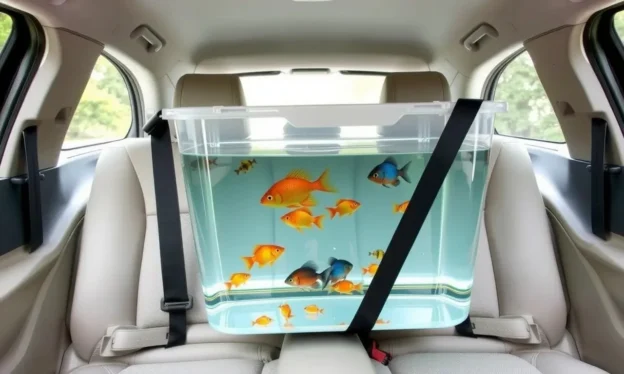
Transporting fish from one location to another can be a daunting task for aquarium enthusiasts. Ensuring the safety and health of your aquatic pets during transit requires careful planning and execution. This article will guide you through essential steps for transporting fish in a car while maintaining optimal water quality and reducing stress.
Preparation for Transportation
Before embarking on your journey, it’s crucial to prepare adequately to ensure the well-being of your fish. Here are some steps to consider:
Choose a Secure Container
- Opt for a portable tank or sturdy containers like a bucket with a lid to prevent spills.
- For small fish, consider using fish bags that are designed for transportation purposes.
- Ensure the container is clean and free of any harmful residues or chemicals.
Maintain Water Quality
- Use water from the fish’s current fish tank to fill the transportation container.
- Monitor the water quality by checking the pH levels and removing any debris.
Control Temperature
- Maintain a stable temperature by using an appropriate temperature control method, such as a portable heater or cooler packs.
- Avoid exposing the fish to direct sunlight or extreme temperatures during transit.
Ensure Oxygen Supply
- Include an air pump if possible to provide adequate oxygen supply, especially for long journeys.
- Leave enough air space in the container for gas exchange if using fish bags.
Transportation Tips
Once you’re ready to transport your fish, consider the following travel tips:
Reduce Stress
- Minimize movement by securing the container with protective padding to avoid sudden jolts;
- Keep the environment dark by covering the container with a towel to reduce stress.
Ensure Vehicle Stability
- Place the container in a stable position in your vehicle to prevent tipping or sliding during transit.
- Drive carefully and avoid abrupt stops to maintain vehicle stability.
Manage Journey Duration
- Plan your route to minimize journey duration and avoid unnecessary detours.
- Take breaks if needed, ensuring the fish are safe and undisturbed.
Use a Filtration System
- Consider a portable filtration system for long-distance travel to maintain clean water and reduce ammonia build-up.
Acclimation Process
Upon reaching your destination, it is important to acclimate your fish to their new environment:
Gradual Acclimation
- Gradually mix small amounts of the new tank water with the transportation water over several hours.
- This slow process helps the fish adjust to changes in water parameters, reducing stress.
Monitor Fish Health
- Observe your fish closely for signs of stress or illness, such as erratic swimming or discoloration.
- Ensure they are eating and behaving normally after being introduced to the new environment.
Final Tank Setup
- Once acclimated, transfer the fish to their new aquarium or fish tank using a net to minimize stress.
- Ensure the tank is fully set up with the appropriate equipment, such as heaters and filters.
Alternative Methods for Transport
If you’re unable to use the primary method, consider these alternatives:
Bucket Method
- Utilize a clean, lidded bucket and fill it with water from the existing tank.
- Secure it with padding to prevent spills and reduce movement.
Fish Bags
- Place fish in specially designed fish bags filled with tank water and ensure they are sealed tightly.
- Provide ample air space in the bags for oxygen exchange during the trip.
Transporting fish in a car requires careful planning, attention to detail, and consideration of the fish’s health. By following these guidelines on container selection, water quality maintenance, temperature control, and stress reduction, you can ensure a safe journey for your aquatic companions. Remember to acclimate them properly at the destination to maintain their well-being and overall health.